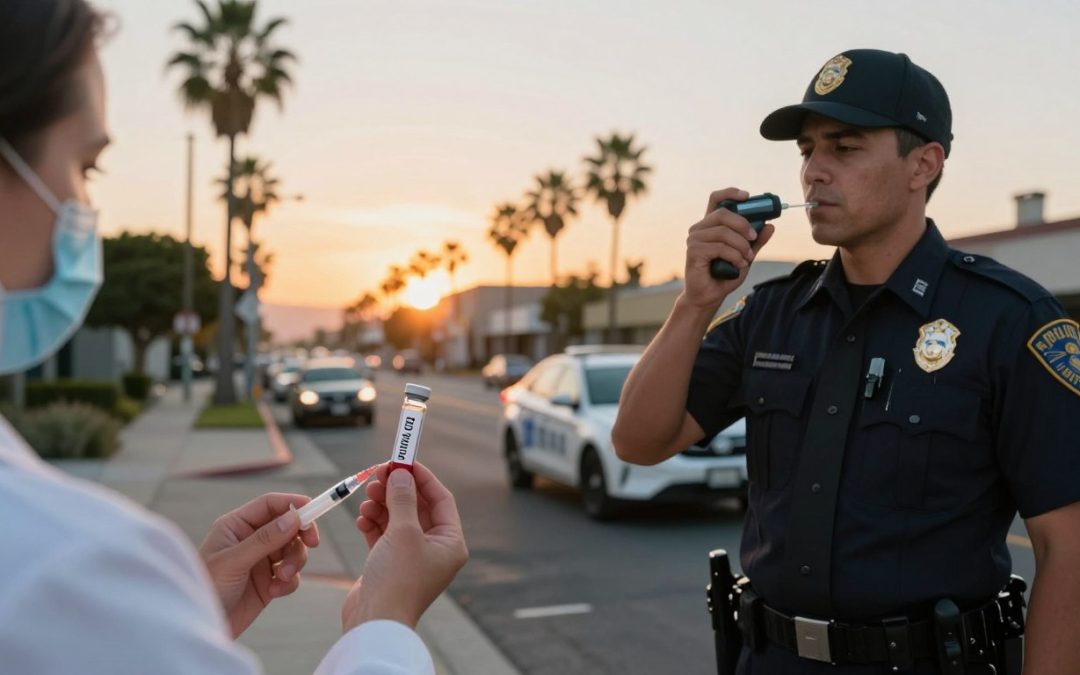
Getting pulled over in California can be very stressful. Drivers often wonder how police collect chemical evidence.
It’s key to know the difference between a blood test vs breath test DUI. These tests help figure out if someone is too drunk to drive.
California DUI laws have strict rules for collecting evidence. If these rules aren’t followed, lawyers can question the evidence in court.
Knowing these rules helps protect your rights. Legal experts use DUI defense strategies to fight your case.
This guide explains how these tests work. It helps drivers understand what happens after an arrest.
Understanding the Mechanics of Blood Test vs Breath Test DUI
When a driver is pulled over, the methods used to check alcohol levels differ a lot. Law enforcement officers use DUI chemical testing to get accurate data. These tests aim to show how much alcohol is in the body at the stop.
How Breathalyzer Devices Function
Breathalyzers are the top choice for officers because they give quick results. They work by detecting alcohol in the breath. This alcohol comes from the blood that has reached the lungs and is then exhaled.
The Science of Alcohol Vapor Measurement
The device checks the alcohol in the breath to guess the blood alcohol concentration. It uses infrared spectroscopy or fuel cell technology to find ethanol molecules. Accuracy is key, as small things can affect the reading.
Common Calibration and Maintenance Issues
To keep devices reliable, breath test calibration is crucial. If a machine isn’t kept up, breathalyzer accuracy can drop, causing false positives. Defense lawyers check maintenance records to make sure the device was working right at the test time.
The Process of Blood Alcohol Concentration Analysis
Blood tests are more detailed than breath tests. They are based on forensic toxicology, giving a direct alcohol level in the blood.
Why Blood Samples Are Considered the Gold Standard
Blood samples are seen as the most reliable evidence in court. They are taken directly from the body, avoiding issues with lung size or breath temperature. This makes the results very reliable for prosecutors to prove impairment.
Potential for Contamination and Chain of Custody Errors
Even though blood samples are the gold standard, they’re not perfect. If the sample isn’t handled right, forensic toxicology results can be wrong due to contamination. Also, any mistake in the chain of custody—who handled the sample—can make the evidence questionable or even throw it out of the trial.
Legal Implications and Challenges in California
When you get a driver’s license in California, you agree to certain rules about chemical testing. These rules guide how police handle suspected drunk driving cases.
Implied Consent Laws in California
The California vehicle code says you agree to blood or breath tests by driving. This is called implied consent California. Driving means you agree to tests if an officer thinks you’re drunk.
Refusing a test at a stop has big consequences. A DUI test refusal can lead to your license being taken away right away. The court might also use it as proof you knew you were wrong.
Challenging Test Results in Court
Having a good DUI legal representation is key. A good lawyer checks if police followed the rules. They look for mistakes that could help you.
Factors That Influence Breath Test Accuracy
Breathalyzers need to be just right to work well. Things like mouth alcohol or the timing of field sobriety tests can mess up the results. If the officer didn’t follow the rules, the test might not be trusted.
Defending Against Blood Test Evidence
Blood tests are usually more reliable, but they can still go wrong. DUI evidence challenges often focus on how the blood was handled. If the blood draw was bad or the sample was messed with, the evidence might not count.
Conclusion
Dealing with a DUI charge in California means understanding how evidence affects your case. Drivers often feel lost in the technical details of chemical tests. But, knowing about these tests can be a strong defense.
Legal experts say blood test reliability is key in court. These tests show alcohol levels but must follow strict rules to be valid. Any mistake in handling or storage can hurt the prosecution’s case.
Breath tests are also under close watch because of their portability. Devices like the Draeger Alcotest 7510 need regular checks and specific training. Even small mistakes in testing can cause errors in the results.
A good lawyer can spot these mistakes to challenge the evidence against you. Getting professional help means every test detail will be checked. Taking action early can protect your driving rights and get a better court outcome.