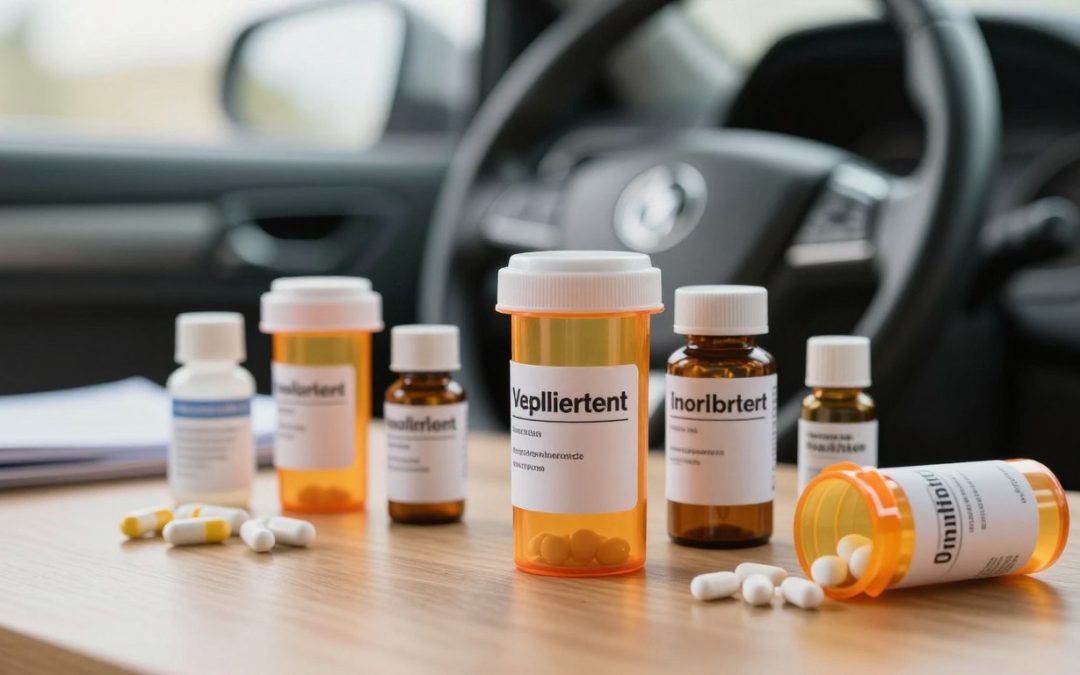
Many think legal medicine is safe to use while driving. But, a prescription drug DUI California case can happen if police think you’re not fit to drive. Even with a doctor’s note, you might still face serious legal issues.
The law cares more about your ability to drive safely than the drug’s legality. A prescription medication DUI happens if an officer thinks your drug use affects your reaction or coordination. Knowing the difference between having a valid prescription and being impaired is key to protecting yourself.
A DUI arrest prescription drugs leads to a complex legal battle. You’ll have to deal with California Vehicle Code Section 23152(f) and DMV penalties. Luckily, there are defense strategies to fight these charges. By looking into your options early, you can defend your driving rights and future.
How Prescription Drug DUI California Charges Work
Many drivers think a doctor’s note means they can’t get in trouble for driving. But, the law cares more about if you can drive safely. It’s important to know how drug impaired driving California laws work, especially if you take medicine every day.
When a Prescription Medication Can Result in a DUI Arrest
California Vehicle Code Section 23152(f) and Drug-Impaired Driving
California Vehicle Code 23152(f) makes it illegal to drive while any drug affects you. It doesn’t matter if the drug is illegal or from a pharmacy. If a drug makes you less able to drive, you could face big legal problems.
Why a Valid Prescription Does Not Automatically Prevent Charges
Many people think a valid prescription DUI defense means they can’t get in trouble. But, having a prescription doesn’t mean you can drive if it makes you tired or slow. Prosecutors say drivers should know how their medicine might affect them.
How Officers Identify Possible Prescription Drug Impairment
Driving Behavior, Field Sobriety Tests, and Statements
Police might stop you if you’re driving strangely, like swerving. They might also do field sobriety tests drugs to check how well you can move and think. They also listen to what you say, as slurred speech or confusion can show you’re not okay to drive.
Drug Recognition Evaluations and Blood Testing
If the usual tests don’t show anything, an officer might do a drug recognition evaluation California. This is a special test to see if you’ve taken certain drugs. Then, they’ll take a blood test to see if you have drugs in your system.
How Prescription Drug DUI Differs From an Alcohol DUI
No Simple Per Se Limit for Most Prescription Drugs
Unlike alcohol, which has a clear limit of 0.08% blood alcohol concentration, prescription drugs don’t have a simple limit. This makes proving guilt harder, as each case needs to look at how the drug affects the person. There’s no one number that proves you’re guilty.
The Prosecution’s Burden to Prove Actual Impairment
Because there’s no simple limit, the prosecution has to show actual impairment. They need to prove the drug made it hard for you to drive like a sober person. This often means they’ll call in experts to talk about how the drug works.
| Feature | Alcohol DUI | Prescription Drug DUI |
|---|---|---|
| Legal Limit | 0.08% BAC (Per Se) | No universal limit |
| Primary Evidence | Breathalyzer | Blood test & observation |
| Prosecution Focus | Chemical concentration | Actual impairment |
| Defense Strategy | Testing accuracy | Medical necessity/lack of impairment |
Penalties, Arrest Procedures, and Potential Defenses
Being arrested for driving under the influence of medication can be scary and confusing. Many people know about alcohol DUI vs drug DUI, but prescription medication DUIs surprise many. Knowing your rights is the first step to defend yourself.
What Can Happen After a Prescription Drug DUI Arrest
Booking, Chemical Testing, and Release Conditions
After an arrest, you’ll be taken to a station for booking. This includes fingerprinting, photos, and personal info. Officers will ask for a blood test DUI drugs to check for substances.
Release conditions depend on the arrest. You might be released without bail or after posting it. Always follow the release instructions to avoid more trouble.
License Suspension and the Separate DMV Process
A DMV license suspension DUI is different from the court case. You have a short time to request a hearing to fight the suspension. Missing this deadline can mean losing your license, even if you’re found not guilty.
Potential Penalties After a California Conviction
Fines, Court Costs, Probation, and DUI Education
DUI penalties California courts aim to prevent future offenses. You might face big fines and must take a DUI education program California. Probation can last three to five years.
Jail Time, License Consequences, and Ignition Interlock Requirements
Jail time is possible, depending on the case. Courts might also limit your license and require an ignition interlock device. These measures help keep everyone safe while you serve your sentence.
Enhanced Consequences for Prior Convictions, Injury, or a Child Passenger
Some factors make penalties worse. Prior offenses, accidents with injuries, or a child in the car can lead to harsher sentences. These can include longer jail times and higher fines.
| Penalty Type | Standard First Offense | Enhanced Offense |
|---|---|---|
| Jail Exposure | Up to 6 months | 1 year or more |
| License Action | Suspension | Revocation |
| Probation | 3 years | 5 years |
Defenses That May Apply in a Prescription Drug DUI Case
Questioning Whether the Medication Actually Impaired Driving
A key defense is to question if the medication really made you drive poorly. Just having a substance doesn’t mean you were impaired. Lawyers often argue there’s no clear proof of poor driving.
Challenging the Traffic Stop, Field Tests, or Drug Recognition Evaluation
The legality of the traffic stop is often questioned. If the officer didn’t have enough reason, the case could be thrown out. Field sobriety tests and Drug Recognition Evaluations are also open to challenge for their lack of scientific backing.
Examining Blood-Test Collection, Storage, and Laboratory Accuracy
The accuracy of the chemical tests is crucial. Mistakes in blood collection, storage, or lab errors can make the results invalid. Challenging these technical aspects is a common and effective defense strategy.
Showing Alternative Explanations for Driving or Physical Symptoms
It’s also possible to argue that symptoms were caused by something else. Fatigue, illness, or stress from the stop can look like impairment. Offering a logical alternative explanation can create doubt and help your case.
Conclusion
Having a valid prescription doesn’t mean you’re off the hook during a traffic stop. Prosecutors still look for evidence of actual impairment to build their case. It’s important to understand the charges against you, not just the medication.
Legal experts say you should question DUI blood test results if the lab procedures seem wrong. A strong defense against prescription drug DUI charges often shows the drug didn’t cause unsafe driving. It’s crucial to address these allegations quickly to avoid worse outcomes.
In California, there are strict deadlines for DMV hearings that are separate from criminal court. Missing these deadlines can lead to your license being suspended right away. It’s important to act fast to avoid harsh penalties for prior DUI convictions.
Those with repeat DUI offenses face big risks, including needing an ignition interlock device in California. Getting professional help is key to understanding these complex rules. A proactive defense strategy is necessary to protect your driving privileges.