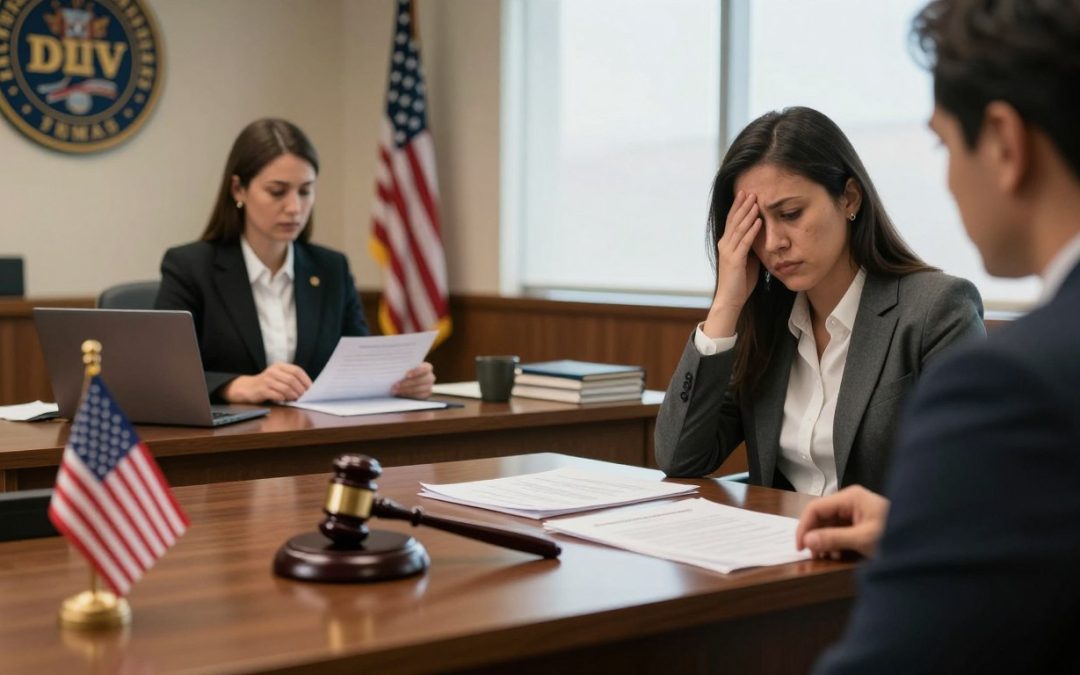
If you’re facing a DUI charge in Los Angeles, you need to understand the DMV DUI hearing process. A DUI charge can seriously affect your driving rights and life.
You have the right to a fair hearing. Seeking help from a DUI defense attorney can significantly impact the outcome. The DMV hearing is different from the criminal court process. It decides if your driver’s license should be suspended or revoked.
Knowing what to expect and how to prepare for the hearing is crucial. It’s important to understand the process and your rights. This helps you handle this tough situation well. well.
How DMV DUI Hearings in California Work
The DMV DUI hearing is key in deciding if you’ll lose your driving rights after a DUI arrest. It’s a separate process from the criminal case against you.
The Purpose of Administrative Hearings
The main goal of a DMV DUI hearing is to decide if your license should be taken away or limited. It looks at the details of your arrest, like why you were stopped and your blood alcohol level. It also checks if you agreed to chemical tests.
Key issues considered during the hearing include:
- Whether the arresting officer had probable cause to stop your vehicle
- The results of your chemical test (breath, blood, or urine)
- Whether you were properly advised of the consequences of refusing a chemical test
California DMV’s Authority in DUI Cases
The California DMV can act on your driving rights, even if you’re not in criminal court. They do this to keep the roads safe for everyone.
Legal Basis for DMV’s Jurisdiction
The DMV’s power comes from California’s implied consent law. This law says drivers must take chemical tests when arrested for DUI. Not taking the test can lead to your license being suspended.
It’s important to understand the DMV’s role in DUI cases. Knowing what happens in the hearing helps you defend your driving rights better.
The Critical 10-Day Window After a DUI Arrest
After a DUI arrest, you have a short 10-day window. This is to ask for a DMV hearing. This hearing can greatly affect your driving rights.
Requesting a DMV Hearing Within 10 Days
The California DMV will tell you about your right to a hearing after a DUI arrest. It’s very important to ask for this hearing within 10 days. You can:
- Call the DMV
- Submit your request online
- Go to a DMV office in person
By asking for a hearing in time, you can keep driving until the DMV decides.
Consequences of Missing the Deadline
If you don’t ask for a hearing in 10 days, your license will be suspended. This is different from any criminal penalties you might face.
Automatic License Suspension
Missing the deadline means your license will be suspended automatically. You won’t get a chance to argue against it. To get your license back, you’ll have to:
- Pay a reinstatement fee
- Complete a DUI program
- Show proof of insurance
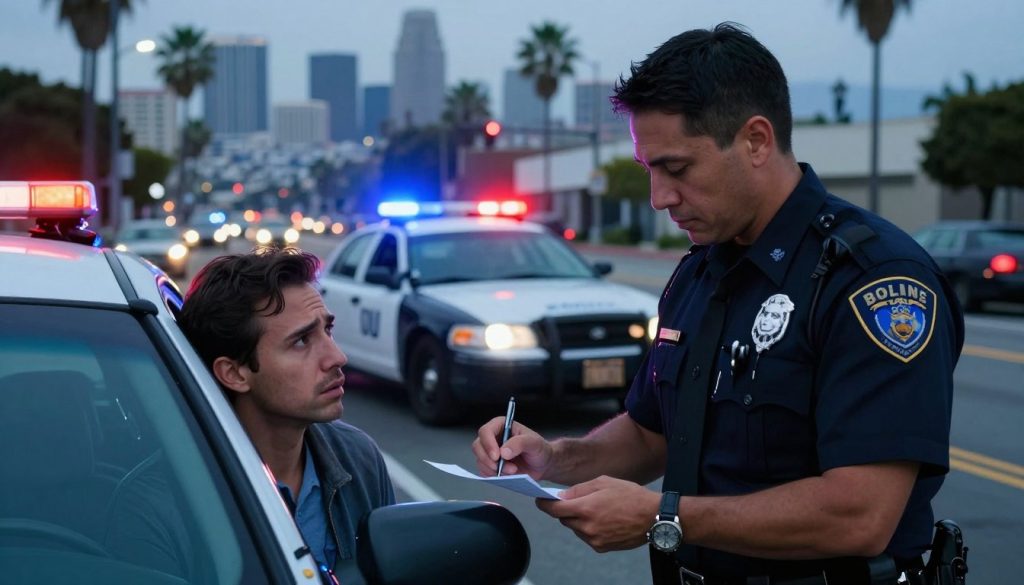
Knowing how important this 10-day window is can help save your driving rights. It’s key to act fast and get help if you’re not sure what to do.
DMV DUI Hearing Los Angeles: The Process Explained
Drivers in Los Angeles facing DUI charges need to know that the DMV hearing is different from the criminal court. This hearing is about your driver’s license status.
Location of Hearings in Los Angeles County
DMV DUI hearings in Los Angeles County happen at the DMV office in the county where you were arrested. You can find the location and contact info on the California DMV website. It’s important to check this info right after your arrest to make sure you can go to the hearing.
What to Expect During the Proceedings
At the DMV DUI hearing, you’ll get to present your case to a DMV hearing officer. The officer will look at the evidence, like police reports and chemical test results. You or your lawyer can question this evidence and share your side of the story.
Typical Duration and Format
A DMV DUI hearing usually lasts 30 minutes to an hour. Here’s what happens:
- The DMV hearing officer shows the evidence against you.
- You or your lawyer can challenge the evidence and share your side.
- The hearing officer reviews everything and makes a decision.
After the hearing, the officer will tell you about your driving privileges. If your license is suspended or revoked, you’ll get info on how to get it back.
Key points to remember:
- Go to the hearing to protect your driving privileges.
- Be ready to present your case and question the evidence.
- Know what to expect from the hearing process.
Administrative vs. Criminal Proceedings: Key Differences
It’s important for drivers in Los Angeles to know the difference between administrative and criminal DUI proceedings. When you’re arrested for DUI, you face two legal actions. These can affect your driving rights and freedom.
Separate Legal Systems with Different Standards
The DMV handles the administrative part, while the Los Angeles County District Attorney’s office manages the criminal case. The DMV hearing is about your driving privileges. The criminal court deals with penalties for your DUI charge.
“The administrative and criminal aspects of a DUI case are distinct and separate, each with its own procedures and potential outcomes,” DUI defense experts say.
How Outcomes in One Case May Affect the Other
The results of these two proceedings are separate but can affect each other. For example, a good result in your DMV hearing doesn’t change the criminal case, and vice versa.
Potential for Dual Consequences
You might lose your license through the DMV process. You could also face fines, jail, or other penalties in criminal court. It’s crucial to address both proceedings effectively to lessen the impact on your life.
Understanding these complex legal processes is key. The standards of proof and goals of each proceeding are different. The DMV focuses on whether your license should be suspended or revoked, based on evidence like police reports and chemical test results.
Burden of Proof in DMV Hearings
Drivers facing DUI charges in California need to know about the burden of proof in DMV hearings. The burden of proof is about the amount of evidence needed to prove a case.
Preponderance of Evidence Standard
In DMV hearings, the preponderance of evidence standard is used. This means the DMV must show it’s more likely than not that the driver was driving under the influence. This standard is lower than the “beyond a reasonable doubt” standard in criminal courts.
Issues Considered by the DMV
The DMV looks at certain issues during the hearing, including:
- Whether the driver was lawfully arrested
- If the driver was driving or in control of the vehicle
- The driver’s BAC level at the time of driving
Limited Scope Compared to Criminal Court
The DMV hearing’s scope is limited. It’s about deciding if a driver’s license should be suspended or revoked. It doesn’t decide if the driver is guilty or not.
The outcome of the DMV hearing can be affected by the quality of evidence. This includes police reports and chemical test results.
Potential License Suspension Periods in California
Drivers in California need to know about license suspension periods if they face DUI charges. The California Department of Motor Vehicles (DMV) can suspend your license before a court conviction. The length of the suspension depends on your offense history and other factors.
First-Time DUI Offense Consequences
A first-time DUI offense can lead to a license suspension of up to four months. You might get a restricted license to drive to work, school, or other important places. It’s key to ask for a DMV hearing within 10 days of your arrest to fight the suspension.
First-time DUI offenders in California may also face:
- Completion of a DUI program
- Installation of an ignition interlock device (IID)
- Fines and court costs
Multiple DUI Offense Penalties
If you’ve had DUIs in the last 10 years, the suspension period gets longer. A second DUI offense can lead to a one-year suspension. A third or more DUIs can result in a three-year suspension.
| DUI Offense | License Suspension Period |
|---|---|
| First-time offense | Up to 4 months |
| Second offense | Up to 1 year |
| Third or subsequent offense | Up to 3 years |
Refusal to Submit to Chemical Testing
Refusing to take a chemical test when arrested for DUI leads to an automatic suspension. A first-time refusal can result in a one-year suspension. Subsequent refusals can lead to suspensions of up to three years.
“The refusal to submit to a chemical test is considered a separate offense and can result in severe penalties, including extended license suspension periods.” – California DMV
It’s important to understand the potential license suspension periods and what affects them. Knowing your rights and the consequences of a DUI can help you make better choices. This way, you can reduce the impact on your driving privileges.
Evidence and Testimony at DMV Hearings
At a DMV hearing in Los Angeles, evidence is key to the outcome. The hearing officer looks at different types of evidence and testimony. This helps them decide about your driving rights.
Officer Statements and Reports
The arresting officer’s report is very important. It details the traffic stop, field sobriety tests, and the arrest. It’s crucial to check these reports for mistakes.
Chemical Test Results
Chemical test results, like BAC tests, are also key evidence. If there were problems with the test equipment or method, these results can be questioned.
Challenging the Evidence
You can challenge the evidence against you. This might mean questioning the officer’s observations or the chemical tests. Challenging evidence well can change the DMV hearing’s outcome.
| Types of Evidence | Description |
|---|---|
| Officer Statements | Detailed reports by the arresting officer |
| Chemical Test Results | BAC tests and other chemical analyses |
| Witness Testimony | Statements from witnesses to the arrest |
Knowing about evidence and testimony in DMV hearings is crucial for drivers with DUI charges. By understanding what to expect and how to challenge evidence, you can protect your driving rights better.
Effective Defense Strategies for DMV Hearings
Effective defense strategies can greatly impact the outcome of your DMV hearing. When facing a DMV hearing in Los Angeles, knowing your options is crucial.
Procedural Violations
Identifying procedural violations during your DUI arrest is a key strategy. This includes issues with the arrest, field sobriety tests, or evidence handling.
Testing Equipment Reliability
Questioning the reliability of BAC testing equipment is another strong strategy. This involves checking the breathalyzer’s calibration and blood sample handling.
Rising Blood Alcohol Defense
The rising blood alcohol defense argues your BAC was legal while driving but increased by the time of testing. This defense can be very effective in some cases.
Title 17 Compliance Issues
Title 17 deals with chemical test regulations. If police didn’t follow these, it could make test results invalid. Common issues include a faulty breath test or not waiting 15 minutes before testing.
| Defense Strategy | Description | Potential Impact |
|---|---|---|
| Procedural Violations | Identifying errors in the arrest process | Evidence suppression |
| Testing Equipment Reliability | Challenging the accuracy of BAC tests | Questioning test results |
| Rising Blood Alcohol Defense | Arguing BAC was lower while driving | Reduced charges or dismissal |
Having legal representation is vital for a DMV hearing. An experienced attorney can guide you and protect your rights.
Restricted License Options After Suspension
You can still drive with a restricted license after a DUI suspension in Los Angeles. But, you must follow specific rules. A restricted license lets you drive under certain conditions, like to and from work or school.
Ignition Interlock Device Requirements in Los Angeles
Getting a restricted license in Los Angeles requires an ignition interlock device (IID) in your car. This device checks your blood alcohol level before starting the engine. It must be installed by a state-approved service provider.
Restricted License Application Process
To apply for a restricted license, you need to show proof of IID installation. You also have to fill out the required application forms. Additionally, you must provide proof of SR-22 insurance.
You’ll submit these documents to the California Department of Motor Vehicles (DMV).
SR-22 Insurance Requirements
SR-22 insurance proves you have the minimum insurance coverage in California. To get an SR-22, contact your insurance provider. They will file the SR-22 form with the DMV.
This insurance costs more than regular insurance. You must keep it for several years, as ordered by the court.
It’s vital to understand and follow these rules to keep your driving privileges. Also, talking to a legal expert can help ensure you meet all the necessary conditions for a restricted license.
Protect Your Driving Privileges
After a DUI arrest in Los Angeles, understanding the DMV hearing is key. This hearing can greatly affect how long your license is suspended. Knowing what to expect and how to defend your case can help you fight the suspension.
If you’re charged with DUI, getting help from a Los Angeles DUI defense attorney is crucial. They can help you navigate the process, gather evidence, and represent you at the DMV hearing. This proactive approach can help protect your driving rights and reduce the daily life.
For personalized help and to talk to a qualified Los Angeles DUI defense attorney, call us at 213.687.4412 for a free consultation and take the first step towards protecting your future. Our experienced attorneys are ready to provide the expert defense you need.